
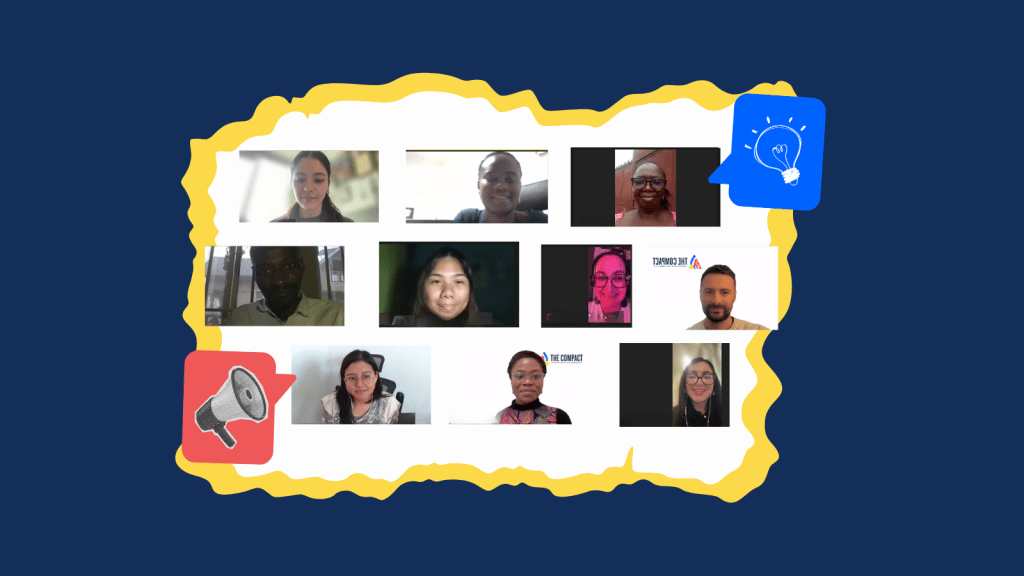
On Thursday, May 2, 2024, the Women, Peace and Security and Humanitarian Action (WPS-HA) Compact Secretariat invited youth-led Signatories to share and discuss strategies to strengthen youth engagement in the WPS-HA Compact and the broader Generation Equality initiative. The discussions centered around the findings from the first accountability report, an overview of the Compact’s intergenerational strategy, and upcoming opportunities for engagement.
With the participation of 15 youth-led signatories from Afghanistan, Cameroon, the Central African Republic, the Democratic Republic of Congo, France, Iran, Mali, Palestine, Philippines, the United Kingdom, and the United States of America, the meeting raised significant concerns regarding the inability of the United Nations to hold member states accountable for human rights abuses and violations, particularly in conflict contexts like Afghanistan, Gaza and the West Bank, and the Democratic Republic of the Congo. Signatories emphasized that despite existing peacebuilding frameworks, the conditions for women and girls in these conflict zones continue to deteriorate.
Summary of key points
Improving Accountability and Restructuring Peacebuilding Strategies
Youth-led signatories highlighted the UN’s failure to enforce accountability among duty bearers, which contributes to ongoing human rights violations and atrocities. To address this, they called for a restructuring of peacebuilding strategies to ensure meaningful impact for women and girls in conflict zones. This includes rethinking frameworks and enforcement mechanisms to better protect vulnerable populations.
Localization and Community Engagement
Youth-led signatory organizations emphasized the importance of translating policy documents into local languages to increase understanding and engagement with community-based peacebuilders. This approach can foster more inclusive participation and ensure that policies are relevant to local contexts.
Mental Health Support
Youth-led signatories advocated for integrating mental health support into peacebuilding efforts. Conflict and crises can have a significant impact on mental health, and providing appropriate support is crucial for both peacebuilders and the communities they serve.
Addressing Intersectional Discrimination
Many youth-led signatories face intersectional discrimination that limits their operations and makes them targets for attacks. This discrimination, coupled with financial and bureaucratic bottlenecks, restricts their ability to work effectively. Signatories called for addressing these discriminations to create a safer and more equitable environment for peacebuilding.
Protecting Civil Society and Young Women Peacebuilders
Signatories highlighted the shrinking civil society space, and the specific challenges that young women face in their daily activities. They called for greater protection measures for young women peacebuilders and increased resources for local women’s organizations. These measures could help create a more secure and supportive environment for women engaged in peacebuilding.
Mentorship and Intergenerational Collaboration
Participants discussed the need for mentorship and avenues for intergenerational collaboration to strengthen the roles of young women in peacebuilding. These initiatives can foster knowledge sharing, capacity building, and greater cohesion among stakeholders.
Proposed recommendations to strengthen youth engagement in the WPS-HA Compact:
1. Financing –Signatories highlighted that accessible and predictable funding is crucial for implementing youth-led initiatives, but obtaining such funding remains a challenge. While the WPS-HA Compact itself is not a funding mechanism, participants urged the Compact to use its multistakeholder framework to advocate for accessible and flexible funding. This would facilitate meaningful youth engagement and the implementation of Compact actions.
2. Mentoring – Intergenerational collaboration through mentorship was identified as an essential component for building partnerships among stakeholders. Participants recommended that the WPS-HA Compact develop a structured mentoring framework to facilitate learning and foster meaningful connections between different generations. This could enhance the impact and sustainability of youth-led initiatives.
3. Communication – To improve communication and foster regional and national connections, Signatories recommended that the WPS-HA Compact Secretariat establish more accessible communication channels. This would enable better collaboration among Signatories and promote the free flow of information related to resources, the broader Generation Equality framework, and UN Women’s programmatic work. A suggested solution was creating a WhatsApp group for easier communication among youth-led signatories.
4. Amplifying Youth-Led Work – Participants emphasized the importance of using digital platforms to amplify the work of youth-led signatories. Leveraging social media and other online platforms would help elevate the visibility and contributions of youth peacebuilders, leading to broader recognition and support for their efforts.
These recommendations provide a roadmap for the WPS-HA Compact to strengthen youth engagement and create a more inclusive and effective framework for achieving its goals. The Compact Secretariat will work with youth Signatories, in collaboration with Generation Equality partners, to address key challenges such as funding, protection, mentorship, and recognition of youth-led initiatives, thus contributing to a more robust intergenerational approach to women, peace, and security and humanitarian action.