
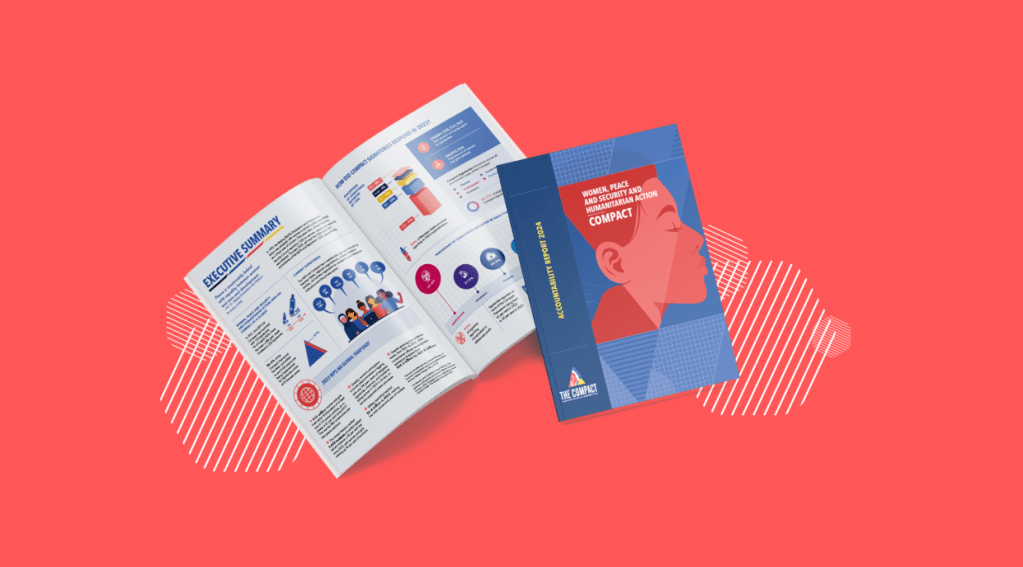
On December 3, 2024, the Compact on Women, Peace and Security and Humanitarian Action (WPS-HA Compact) gathered signatories and peace and security practitioners for an online Thematic Knowledge Session (TKS) exploring how the lessons learned from the 2024 WPS-HA Compact Accountability Report and signatories’ work during the past year can help inform key priorities and recommendations for 2025.
Despite committed civil society organizations, member states, UN entities, regional organizations, and others, more ambitious and impactful actions are needed to improve the lives of the 612 million women and girls living in conflict and crisis today, as the 2024 WPS-HA Compact Accountability Report reveals both alarming trends and significant progress in advancing gender equality in conflict-affected regions. The report highlighted how signatories reached nearly 25 million women and girls and invested US$1.55 billion to implement actions. The top five countries of implementation included Ukraine, South Sudan, Colombia, Afghanistan, and Sudan, and 75% of signatories reported on at least one indicator.
Harriette Williams Bright, WPS-HA Compact Lead at UN Women, moderated the event and provided opening remarks where she highlighted the importance of identifying key actions that can be taken forward in 2025. Using the 2024 Accountability Report findings as a springboard to reflect on the Compact’s collective progress and ways to scale up impactful actions, the event featured presentations by the report drafters of each thematic area. Following the presentations, participants were invited to share their thoughts on how fit for purpose the report’s key recommendations are. The following signatories shared their reflections:
- Ms. Signe Guro Gilen, Norway Special Envoy for Women Peace and Security and WPS-HA Compact Board Co-Chair
- Ms. Mavic Cabrera-Balleza, Founder and CEO of the Global Network of Women Peacebuilders and WPS-HA Compact Board Co-Chair
- Ms. Hibaaq Osman, CEO and Founder, Karama
- Ms. Simmi Dixit, Deputy Director, Canada’s National Action Plan on Women Peace and Security, Global Affairs Canada
- Ms. Elisabetta Brumat, Senior Protection Coordinator, UNHCR
- Ms. Ruth Bolline Aluoch, Political/Gender Affairs Officer, United Nations Department of Peace Operations
The presentations on the report’s thematic areas highlighted that women-led mediation efforts at the local level are yielding results, but that more data and reporting is needed to strengthen the investment case and showcase positive outcomes on gender equality and peacemaking. Presenting speakers also called for more efforts to share data on outcomes and lessons learned and inspire more mainstream multilateral actors to learn from Compact signatories and the principles of transformation. For example, it was suggested that the Compact’s success in advancing youth leadership and participation, including the achievement of 91% of signatories reporting on youth engagement in their 2023 reporting, be shared more widely.
Following the presentations, various signatories shared their reflections on the report’s recommendations, which were well received and commended as fit for purpose by a variety of stakeholders, including member states, civil society organizations, regional organizations, and various UN agencies. The recommendations were noted as addressing the key challenges in advancing the WPS agenda in 2025 through their practical and forward-looking lens.
Compact signatories were celebrated for their collective impact on continuing to support displaced women and girls, as evidenced by results noted in the top five countries of implementation. Several signatories reflected that the Compact’s principles of transformation have served as key drivers of transformational change, including the tailoring approaches to different contexts and the localization of implementation, as well as the need to continue focusing on intergenerational collaboration.
Reflections noted that the most effective way of advancing the WPS agenda and gender-responsive humanitarian action is through dedicated, flexible funding to women-led organizations – as well as clear and measurable funding targets – and setting a positive example for other donors. The need to maintain close and formal partnerships with civil society organizations for the successful implementation of National Action Plans (NAPs) was highlighted, as well as the need to embrace innovative reporting tools that complement numbers and statistics with real impact stories on outcomes. Several reflections also highlighted the report’s recommendations on women’s economic empowerment and the importance it plays in recovery plans and national policies.
Signatories also stressed the importance of leveraging the 25th anniversary of UNSCR 1325 and the 30th anniversary of the Beijing Declaration and Platform for Action as key advocacy moments for doubling down on the implementation of the WPS framework. Lastly, participants highlighted the need to encourage signatories to report on the outcomes and results of their actions to showcase the transformative change of their investments and any remaining gaps and challenges.
Outcome document coming soon.