
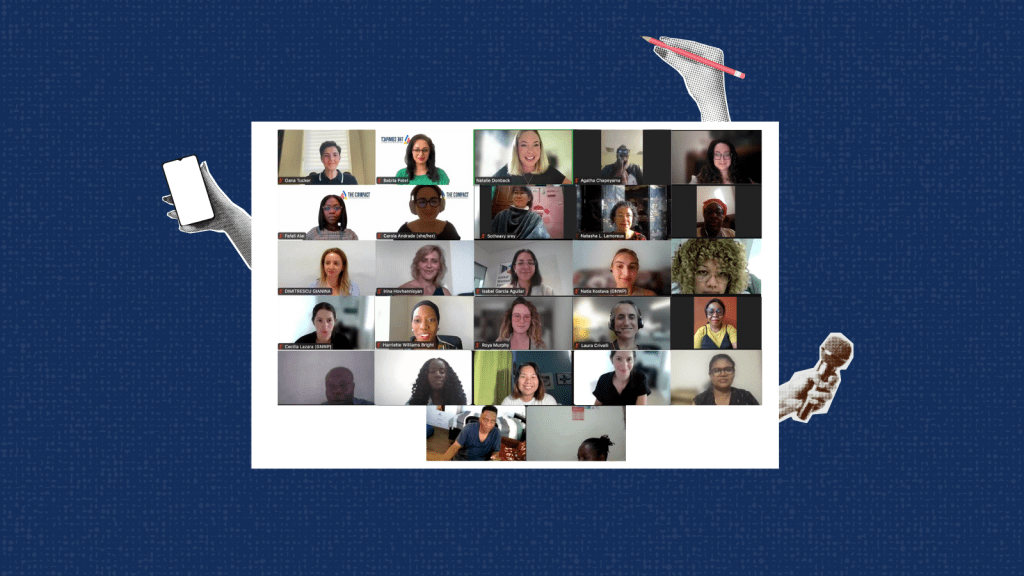
On Wednesday, July 24, 2024, the Women, Peace and Security and Humanitarian Action Compact (WPS-HA) hosted a practical session for its signatories on ‘How to Communicate Your Impact through the Compact.’ The virtual event kicked off with welcome remarks, mid-year updates, and upcoming engagements from the WPS-HA Compact Lead, Harriette Williams Bright.
The first presentation was given by Natasha L. Lamoreux, WPS Coordination Specialist at UN Women who gave an overview of UN Women’s knowledge resources on WPS and gender-responsive Humanitarian Action. Natalie Donback, Compact Strategic Media Consultant, explored how media engagement can be used to elevate the Women, Peace and Security agenda to broaden the predominant narrative around women as victims of war by also highlighting their leadership in peace processes and humanitarian action. She also gave an overview of how the Compact’s different content assets can be used by signatories to showcase and communicate their impact.
Babita Patel, Global Storyteller and Humanitarian Photographer discussed best practices for human-centered storytelling and gave tips for how to craft compelling and impactful campaigns. Finally, Carola Andrade, Compact Social Media Consultant, offered practical tips for impactful visual storytelling and practical tips for non-professional photographers.
The central discussion focused on amplifying the critical roles women play as active agents of change and peace within conflicts and crises settings. The participating Signatories contributed valuable insights, sharing their strategies and the challenges they face when communicating their impact.
Summary of Key Takeaways:
Media Collaboration is Crucial for Advocacy
Strategic collaboration with the media is essential to effectively communicate and amplify the impact of WPS-HA Compact signatories. Shifting the predominant narrative from portraying women not only as victims of conflict but also recognizing them as active agents of inclusive and sustainable peace is key. By sharing impactful stories and key messages about women’s leadership and resilience, the Compact can help signatories reach a broader audience, influence policymakers, and secure necessary support and funding for women-led organizations and initiatives.
Human Stories at the Center
Humanizing stories about WPS and HA is essential to highlight the journeys and transformations of women and women-led organizations. By centering storytelling around the four C’s—Character (who is the main focus of the story?), Context (where does the story take place?), Conflict (what is the one thing the character must overcome?), and Change (who is the character now after overcoming the conflict?)—signatories can create compelling and humanized narratives that resonate deeply with the audience. The narrative should be relatable and impactful, conveying authentic emotions and incorporating thoughtful, in-depth questions that go beyond yes-no answers. This approach not only brings the stories of women to life but also fosters a deeper connection with the audience, emphasizing the human element at the core of their experiences.
Keep an Eye on Inclusive and Impactful Visual Narratives
Creating inclusive visual narratives that highlight women’s resilience in conflict and crisis is essential for a comprehensive understanding of their experiences. Often, scenes of war or violence are depicted without context, but images should also highlight women’s leadership, diversity, and resilience during and after conflict.
To create powerful visuals, focus on composition and lighting, capture genuine emotions, provide visual context, and emphasize details; these techniques ensure photos are visually appealing. Take photos of candid moments to make photos relatable and impactful and provide context by including elements that tell a story about the subject. Finally, try to take a sequence of photos of various moments focusing on women and girls’ diversity and inclusiveness to narrate a comprehensive story; and look at the small details that convey broader messages on your story.
Amplify Your Organization’s Impact with the Compact
The WPS-HA Compact can assist in media engagement through Op-Eds co-authored by signatories and publishing interviews with key thought leaders and signatories to amplify their work in relation to Compact commitments. The yearly Compact Accountability Report as well as the bi-monthly Compact Dispatch are other excellent resources that can be leveraged to showcase Compact signatories’ impact.
The Compact is also active on X (formerly Twitter), LinkedIn, and Facebook. These digital platforms allow signatories to stay updated with the Compact’s latest initiatives, engage, and amplify signatory efforts. Signatories can also have their visual content showcased on the Compact’s Flickr account and coordinate for audiovisual interviews; see examples on the Compact’s YouTube channel.
Explore UN Women resources for useful WPS and HA information:
- UN Women offers a wealth of knowledge and information on Women, Peace and Security (WPS) and gender-responsive Humanitarian Action (HA).
For specific information on Women, Peace and Security:
- WPS page and Facts and Figures
- 2024 Report of the UN Secretary-General on WPS
- Women in Peace Processes Monitor: (Website forthcoming)
- For specific information on gender-responsive HA, the IASC Reference Group on Gender and Humanitarian Action provides valuable information.
There are also other UN Women-led initiatives with valuable resources and data:
- Women Count: A data visualization initiative that monitors the implementation of the SDGs.
- UN Women Knowledge Hub: A central resource for gender-related disaster and climate resilience.
- Women in Peace Processes Monitor: (Website forthcoming)